UMOYA
RHYTHMS THAT CARRY MORE THAN A BEAT
BY AFRIKALEIDOSCOPE
Somewhere, right now, a track is playing. Buried in it is a chant — recorded once, somewhere specific, by someone with a name — now looped under a beat and released under someone else's. The credit reads one name. Not the voice's. The producer's.
You could hear that and keep dancing. Most people do. It costs nothing to enjoy a good night without knowing what made it possible — that's the privilege, quietly working exactly as designed. But nothing about that not-knowing is neutral. What's absorbed without context doesn't stay inert — it becomes how the sound gets understood, repeated, and eventually taught to the next listener who also won't know.
Being Zimbabwean, growing up close to South Africa, meant this music was already in me before I ever went looking for it — the way something settles into you long before you have a name for it. The real beginning came later, in a sold-out room, watching a DJ take a few hundred strangers through the same track twice — once whole, then stripped back to its bare pulse — building tension, releasing it, building it again, like someone conducting a room rather than playing a set. When the lights came up, the crowd looked the way I felt: pulled back from somewhere none of us had fully returned from. I've been chasing that room ever since — and slowly realised the feeling had a history behind it, a reason it worked exactly the way it did.
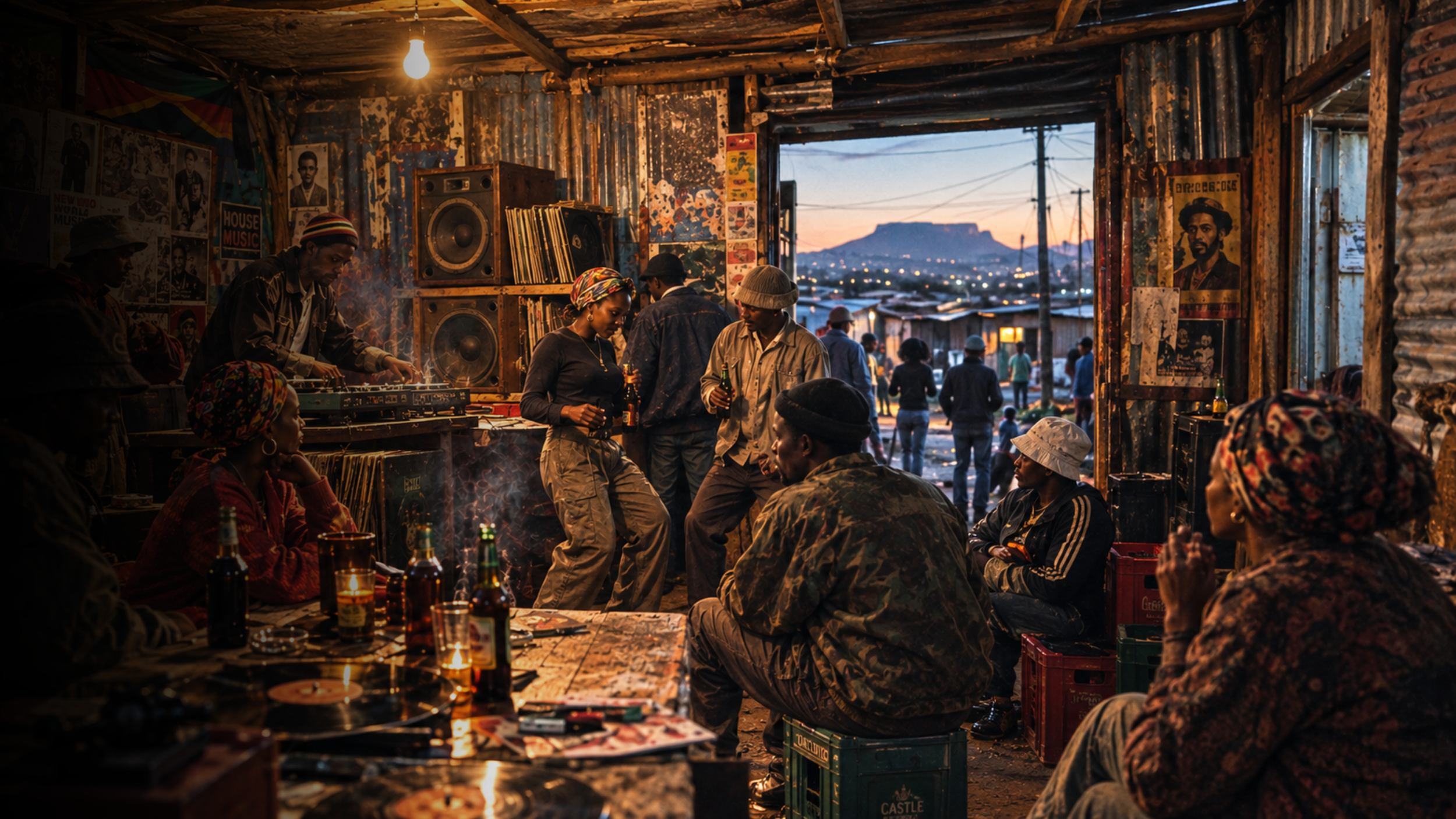
This isn't the first time it's happened. Jazz. Blues. Rock and roll. Rap. House itself — born in Black, queer clubs in Chicago, in rooms that existed because the world outside offered no refuge — was picked up, renamed, and sold back to the world with the people who built it written out of the credits. Every generation of Black sound seems to run the same course: made out of necessity, discovered by the mainstream, stripped of the people and the context that made it work, credited honestly only decades later, if at all. Southern African Deep House is not exempt from that course. It is, right now, somewhere inside it.
What's usually missing isn't law. Jazz and blues had copyright too, and copyright failed them as often as it protected them. What's missing moves slower than law — an archive, a canon, a body of record that survives once the trend has moved on to the next sound. Right now, value follows attention, and attention follows cycles no one community controls. A producer with no relationship to where this sound comes from can release a track today, watch it travel overnight, and profit from it before anyone has the infrastructure to ask where it came from, or who should have been paid. That's not hypothetical — it's the economics of how this music circulates right now, for real people building real careers on a lineage that isn't theirs to build on unchecked. Without a record, once the trend moves on, nothing is left behind to hold anyone accountable.
So this is not a request to be understood. We know what we carry — we live inside it daily. What we didn't inherit, because it was taken from those before us, is the infrastructure to hold our own story before someone else tells it for us. That work isn't correction. It's continuation — picking up something interrupted, not fixing something broken. It asks, first, for self-knowledge, because self-knowledge, flaws included, is the only ground self-acceptance can stand on. Only once you know yourself do you get to decide, freely, how you want to be known.
Here's what's true, whether or not you asked for it: once you know something, you cannot return to not knowing it. What you do next was always the only part that was ever yours to choose.
— AfriKaleidoscope